

Andamine Crusher
Becerro
- Desde
- 13 Nov 2025
- Mensajes
- 23
- Tema Autor
- #1
Large concrete blocks from building demolition, bridge dismantling, and infrastructure reconstruction can create significant challenges for recycling operations. Their dimensions, weight, and internal reinforcement may exceed the acceptable feed specifications of conventional crushing equipment. Feeding oversized concrete directly into a crusher can cause blockages, uneven loading, excessive component wear, and production interruptions. Therefore, effective concrete processing begins before the material enters the crushing chamber. Understanding maximum feed size, concrete characteristics, and pre-breaking requirements helps operators establish a stable crushing process and improve the efficiency of construction waste recycling.
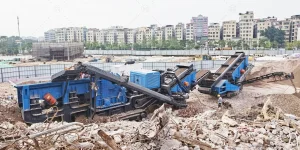
The main limitation is the crusher's maximum feed opening and permitted feed size. A block that is too large may become trapped at the inlet or prevent other materials from entering the crushing chamber. Irregularly shaped concrete pieces can also bridge across the feeding opening, interrupting material flow and increasing the risk of equipment damage.
Pre-breaking reduces oversized concrete into manageable pieces before primary crushing. This process helps maintain consistent feeding, reduces sudden mechanical loading, and allows the concrete crusher to operate closer to its intended capacity. For large demolition projects, establishing a suitable pre-breaking procedure is particularly important because oversized structural waste can account for a substantial proportion of the incoming material.
For example, a jaw crusher is commonly used for primary crushing because its large feed opening can accommodate relatively large concrete fragments. An impact crusher is often applied in secondary crushing to further reduce the material and produce recycled aggregates with suitable particle shapes. Feeding oversized blocks into either machine can cause operational problems if their dimensions exceed the manufacturer's recommended limits.
It is also important to distinguish between maximum feed size and average feed size. A crushing plant may receive mostly small and medium-sized concrete fragments, but a few exceptionally large blocks can still interrupt production. Therefore, feed inspection should identify the largest dimensions and irregular shapes rather than relying only on average measurements. Operators should always follow the equipment manufacturer's permitted feed specifications instead of assuming that a large inlet can accept every oversized block.
Hydraulic concrete pulverizers provide another option, particularly for reinforced concrete structures. Their crushing jaws apply pressure to concrete sections while helping expose embedded reinforcement. This can make subsequent material separation easier and reduce the amount of steel entering the crushing chamber. For large structural elements, operators may combine breakers and pulverizers depending on concrete thickness, reinforcement density, and site conditions.
Mechanical cutting or controlled dismantling may also be necessary when handling large precast components or sections with complicated reinforcement. The objective is not to achieve a uniform final particle size during pre-breaking, but to produce manageable fragments that meet the primary crusher's feed requirements. Selecting the appropriate method helps avoid unnecessary processing time and equipment costs.
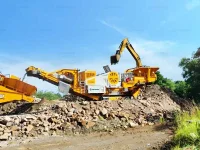
Pre-sorting also improves the efficiency of construction waste recycling . Materials such as wood, plastic, insulation, soil, and other contaminants should be removed where practical. Excessive soil and fine materials can affect screening efficiency, while non-crushable objects may damage equipment or interrupt material flow.
After primary crushing, magnetic separators can remove much of the ferrous metal released from the concrete. This creates an additional recovery opportunity while reducing steel contamination in recycled aggregates. Combining pre-sorting, appropriate pre-breaking, crushing, and magnetic separation establishes a more reliable process for handling mixed demolition waste.
A practical process begins with material inspection and sorting, followed by mechanical pre-breaking of oversized blocks. Suitable fragments are then transferred to the primary crusher, commonly a jaw crusher, for initial size reduction. The crushed material can proceed to screening, secondary crushing, and magnetic separation according to the required recycled aggregate specifications.
Feed consistency is particularly important when the crushing plant operates continuously. Excavator operators and feeding equipment should maintain a steady supply without overloading the crusher. A properly designed receiving area and sufficient temporary stockpile space can help separate pre-breaking activities from continuous crushing operations. This arrangement reduces interruptions caused by irregular demolition schedules or sudden arrivals of oversized material.
Proper feed preparation also helps improve the utilization of downstream equipment. When the primary crusher receives appropriately sized material, conveyors and screening systems can operate more consistently. This makes production planning more predictable and helps operators maintain the required output distribution for different construction applications.
For construction waste recycling businesses, the objective should be to minimize the combined cost of demolition, pre-breaking, material handling, crushing, and separation. Comparing these costs under different processing arrangements helps determine whether additional pre-breaking equipment is economically justified. The most effective approach is one that maintains stable throughput while producing recycled materials that meet the intended application requirements.
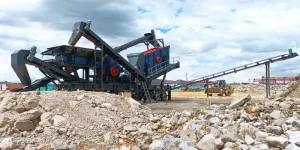
Why Large Concrete Blocks Require Pre-Breaking
Concrete demolition waste rarely has a uniform size distribution. Some materials are already fragmented during demolition, while others remain as massive structural sections, foundation blocks, or reinforced concrete components. These oversized pieces cannot always enter the crusher directly, even when the equipment has sufficient nominal production capacity.The main limitation is the crusher's maximum feed opening and permitted feed size. A block that is too large may become trapped at the inlet or prevent other materials from entering the crushing chamber. Irregularly shaped concrete pieces can also bridge across the feeding opening, interrupting material flow and increasing the risk of equipment damage.
Pre-breaking reduces oversized concrete into manageable pieces before primary crushing. This process helps maintain consistent feeding, reduces sudden mechanical loading, and allows the concrete crusher to operate closer to its intended capacity. For large demolition projects, establishing a suitable pre-breaking procedure is particularly important because oversized structural waste can account for a substantial proportion of the incoming material.
Understanding Feed Size Requirements for Concrete Crushers
Maximum feed size is one of the most important specifications when selecting a concrete crusher . However, the acceptable feed dimension depends on more than the width of the crusher inlet. Operators must also consider the crushing chamber geometry, material hardness, concrete block shape, and reinforcement conditions.For example, a jaw crusher is commonly used for primary crushing because its large feed opening can accommodate relatively large concrete fragments. An impact crusher is often applied in secondary crushing to further reduce the material and produce recycled aggregates with suitable particle shapes. Feeding oversized blocks into either machine can cause operational problems if their dimensions exceed the manufacturer's recommended limits.
It is also important to distinguish between maximum feed size and average feed size. A crushing plant may receive mostly small and medium-sized concrete fragments, but a few exceptionally large blocks can still interrupt production. Therefore, feed inspection should identify the largest dimensions and irregular shapes rather than relying only on average measurements. Operators should always follow the equipment manufacturer's permitted feed specifications instead of assuming that a large inlet can accept every oversized block.
Pre-Breaking Methods for Oversized Concrete Waste
Mechanical pre-breaking is generally used when demolition waste contains large concrete sections that cannot be processed directly by the primary crusher. Hydraulic breakers mounted on excavators can fracture massive concrete blocks into smaller pieces. Their impact forces make them suitable for reducing thick structural concrete and breaking apart heavily compacted demolition materials.Hydraulic concrete pulverizers provide another option, particularly for reinforced concrete structures. Their crushing jaws apply pressure to concrete sections while helping expose embedded reinforcement. This can make subsequent material separation easier and reduce the amount of steel entering the crushing chamber. For large structural elements, operators may combine breakers and pulverizers depending on concrete thickness, reinforcement density, and site conditions.
Mechanical cutting or controlled dismantling may also be necessary when handling large precast components or sections with complicated reinforcement. The objective is not to achieve a uniform final particle size during pre-breaking, but to produce manageable fragments that meet the primary crusher's feed requirements. Selecting the appropriate method helps avoid unnecessary processing time and equipment costs.
Managing Reinforcement and Contamination Before Crushing
Reinforced concrete presents additional challenges because steel bars can become entangled with concrete fragments or extend beyond the dimensions of the material. Long reinforcement bars may obstruct feeding systems, become caught in conveyor components, or interfere with crushing operations. Before feeding, operators should assess whether exposed steel needs to be cut, separated, or reduced in length.Pre-sorting also improves the efficiency of construction waste recycling . Materials such as wood, plastic, insulation, soil, and other contaminants should be removed where practical. Excessive soil and fine materials can affect screening efficiency, while non-crushable objects may damage equipment or interrupt material flow.
After primary crushing, magnetic separators can remove much of the ferrous metal released from the concrete. This creates an additional recovery opportunity while reducing steel contamination in recycled aggregates. Combining pre-sorting, appropriate pre-breaking, crushing, and magnetic separation establishes a more reliable process for handling mixed demolition waste.
Coordinating Pre-Breaking with the Primary Crushing Process
Pre-breaking should be planned as part of the overall crushing process rather than treated as an isolated demolition activity. If fragments are reduced too aggressively, excessive fines may be generated before they enter the primary crusher. This can increase unnecessary handling and reduce the efficiency of subsequent screening stages.A practical process begins with material inspection and sorting, followed by mechanical pre-breaking of oversized blocks. Suitable fragments are then transferred to the primary crusher, commonly a jaw crusher, for initial size reduction. The crushed material can proceed to screening, secondary crushing, and magnetic separation according to the required recycled aggregate specifications.
Feed consistency is particularly important when the crushing plant operates continuously. Excavator operators and feeding equipment should maintain a steady supply without overloading the crusher. A properly designed receiving area and sufficient temporary stockpile space can help separate pre-breaking activities from continuous crushing operations. This arrangement reduces interruptions caused by irregular demolition schedules or sudden arrivals of oversized material.
How Proper Feed Preparation Improves Recycling Economics
The economic value of pre-breaking is closely related to equipment utilization and production stability. Although additional excavator operations or hydraulic attachments create upfront costs, they can prevent more expensive problems inside the crushing plant. Blockages, damaged components, emergency maintenance, and prolonged downtime can significantly increase the cost per ton of recycled aggregates.Proper feed preparation also helps improve the utilization of downstream equipment. When the primary crusher receives appropriately sized material, conveyors and screening systems can operate more consistently. This makes production planning more predictable and helps operators maintain the required output distribution for different construction applications.
For construction waste recycling businesses, the objective should be to minimize the combined cost of demolition, pre-breaking, material handling, crushing, and separation. Comparing these costs under different processing arrangements helps determine whether additional pre-breaking equipment is economically justified. The most effective approach is one that maintains stable throughput while producing recycled materials that meet the intended application requirements.