

Andamine Crusher
Becerro
- Desde
- 13 Nov 2025
- Mensajes
- 19
- Tema Autor
- #1
Large quarries in Nigeria require more than a powerful crusher to maintain stable aggregate production. High-capacity operations need coordinated feeding, crushing, screening, stockpiling, material handling, and maintenance systems. When evaluating a stone crusher for sale in Nigeria , quarry owners should therefore consider the entire production process rather than selecting equipment based only on its maximum rated capacity. A well-designed crushing plant can improve output stability, control production costs, and provide different aggregate sizes for Nigeria's construction and infrastructure markets.
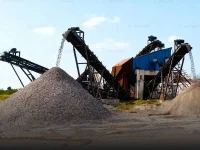
The first step in planning high-capacity aggregate production is understanding the raw material. Nigerian quarries may process granite, basalt, limestone, and other types of rock, each with different hardness, abrasiveness, moisture content, and natural fracture characteristics.
Rock properties influence the selection of primary and secondary crushers, wear parts, power requirements, and expected production efficiency. A crusher designed for relatively soft limestone may not be the most economical choice for highly abrasive granite.
Before purchasing a stone crusher for sale in Nigeria , quarry operators should test the material and determine its maximum feed size, hardness, abrasiveness, and expected product requirements.
Large quarry projects should calculate capacity from current market demand rather than simply choosing the largest available machine.
For example, a quarry supplying road contractors may have a different production requirement from one supplying concrete and asphalt plants. The required output should consider expected sales volume, operating hours, seasonal demand, and future expansion.
It is also important to distinguish between theoretical capacity and actual production. A crusher rated at a certain number of tons per hour may produce less in real conditions because of feed variation, material properties, downtime, maintenance, and screening limitations.
A practical capacity plan should therefore include some operating margin without creating excessive unused capacity.
Large quarries commonly use multi-stage crushing because reducing large blasted rocks directly to final aggregate sizes in one step is often inefficient.
A typical configuration may include:
Feeding → Primary Crushing → Secondary Crushing → Screening → Tertiary Crushing → Final Screening → Stockpiling
The primary crusher handles the largest material and reduces it to a manageable size. A secondary crusher then produces smaller material, while additional crushing may be required when fine aggregates or specific particle sizes are needed.
The exact combination depends on the raw material and final products. Jaw crushers are commonly suitable for primary crushing, while cone or impact crushers may be selected for secondary and tertiary stages depending on rock characteristics and desired particle shape.
The final products should influence the entire crushing plant design. A quarry may need several aggregate sizes, such as coarse aggregate for road construction, smaller aggregate for concrete production, and manufactured sand or fine material for specific applications.
Screening is therefore as important as crushing. Efficient screens separate materials into the required sizes and return oversize material to the crusher when a closed-circuit configuration is used.
If the quarry consistently produces too much unwanted material, the problem may not be the crusher itself. Incorrect screen selection, poor feed distribution, or an unsuitable crushing ratio can also affect product yield.
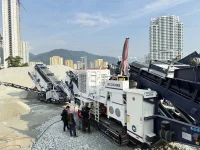
A high-capacity crusher cannot achieve stable production without a reliable feeding system. Large rocks should be delivered to the primary crusher at a controlled and consistent rate.
A vibrating feeder or similar heavy-duty feeding system can regulate material flow and remove smaller material before it reaches the crusher when pre-screening is appropriate.
Irregular feeding can cause production fluctuations. Too little material reduces crusher utilization, while excessive feeding can overload the equipment and increase wear.
For a large quarry, the feeder, crusher, conveyor, and screen should therefore be considered as one integrated system.
After crushing and screening, aggregates need to be transported and stored efficiently. Conveyor systems can provide continuous material handling between processing stages and stockpiles.
Stockpile design should prevent unnecessary rehandling while keeping different aggregate sizes separated. The plant layout should also allow loaders and trucks to move safely around the production area.
A poorly designed material-handling system can become a bottleneck even when the crushers themselves have sufficient capacity. For this reason, the complete plant should be designed around the required production flow rather than individual machine specifications.
High production does not automatically mean high profitability. Large quarries need to monitor the cost of producing each ton of aggregate.
Major operating costs may include fuel or electricity, wear parts, labor, maintenance, lubrication, material handling, and transportation.
Wear parts deserve particular attention when processing hard and abrasive rock. Choosing suitable liners, jaw plates, blow bars, or cone crusher components can affect both maintenance frequency and cost per ton.
Energy efficiency is also important. Running oversized equipment below its efficient operating range can increase the investment and operating costs without providing sufficient additional production.
High-capacity quarries often operate for long hours, so preventive maintenance should be part of the original plant design.
Maintenance access should be considered when positioning crushers, screens, conveyors, and other equipment. Operators need sufficient working space to inspect components, replace wear parts, lubricate equipment, and perform repairs.
Keeping critical spare parts on site can also reduce downtime. For remote quarry operations, waiting for a replacement component to arrive can interrupt production for significantly longer than the current repair time.
A planned maintenance schedule is therefore essential for maintaining consistent output.
A stationary crushing plant may be the most suitable choice for a large quarry with long-term production requirements. However, mobile equipment can provide flexibility during quarry development or when extraction areas change.
A mobile or semi-mobile crushing solution can reduce the distance that raw material travels before processing. This can be particularly useful when the quarry expands progressively or when the working face moves significantly.
The choice should be based on the quarry's expected operating life, extraction plan, internal haul distances, and future relocation requirements.
For entrepreneurs researching how to start stone crusher business , high-capacity quarrying requires careful planning before purchasing machinery. The first step is to identify a reliable source of stone and evaluate local demand for different aggregate sizes.
Next, assess the quarry location, transportation routes, available utilities, land requirements, environmental considerations, labor availability, and expected production volume. These factors help determine whether a small, medium, or high-capacity crushing plant makes economic sense.
A complete business plan should include equipment investment, quarry development, transportation, labor, maintenance, raw-material costs, expected aggregate selling prices, and projected production volume. The objective is not simply to maximize tons per hour but to create a sustainable cost structure and reliable customer base.
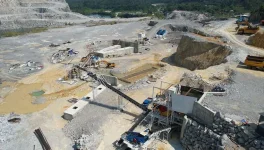
When comparing a stone crusher for sale in Nigeria , look beyond the equipment quotation. A suitable supplier should be able to provide a complete crushing solution based on the quarry's material, capacity, and final products.
Important considerations include equipment configuration, production guarantees, spare-parts availability, installation support, operator training, maintenance guidance, and after-sales technical service.
For large quarries, supplier experience with complete crushing plants can be more valuable than purchasing individual machines without considering how they will work together.
Start With the Quarry's Raw Material
The first step in planning high-capacity aggregate production is understanding the raw material. Nigerian quarries may process granite, basalt, limestone, and other types of rock, each with different hardness, abrasiveness, moisture content, and natural fracture characteristics.
Rock properties influence the selection of primary and secondary crushers, wear parts, power requirements, and expected production efficiency. A crusher designed for relatively soft limestone may not be the most economical choice for highly abrasive granite.
Before purchasing a stone crusher for sale in Nigeria , quarry operators should test the material and determine its maximum feed size, hardness, abrasiveness, and expected product requirements.
Determine the Required Production Capacity
Large quarry projects should calculate capacity from current market demand rather than simply choosing the largest available machine.
For example, a quarry supplying road contractors may have a different production requirement from one supplying concrete and asphalt plants. The required output should consider expected sales volume, operating hours, seasonal demand, and future expansion.
It is also important to distinguish between theoretical capacity and actual production. A crusher rated at a certain number of tons per hour may produce less in real conditions because of feed variation, material properties, downtime, maintenance, and screening limitations.
A practical capacity plan should therefore include some operating margin without creating excessive unused capacity.
Design the Crushing Process in Stages
Large quarries commonly use multi-stage crushing because reducing large blasted rocks directly to final aggregate sizes in one step is often inefficient.
A typical configuration may include:
Feeding → Primary Crushing → Secondary Crushing → Screening → Tertiary Crushing → Final Screening → Stockpiling
The primary crusher handles the largest material and reduces it to a manageable size. A secondary crusher then produces smaller material, while additional crushing may be required when fine aggregates or specific particle sizes are needed.
The exact combination depends on the raw material and final products. Jaw crushers are commonly suitable for primary crushing, while cone or impact crushers may be selected for secondary and tertiary stages depending on rock characteristics and desired particle shape.
Match the Plant to Final Aggregate Demand
The final products should influence the entire crushing plant design. A quarry may need several aggregate sizes, such as coarse aggregate for road construction, smaller aggregate for concrete production, and manufactured sand or fine material for specific applications.
Screening is therefore as important as crushing. Efficient screens separate materials into the required sizes and return oversize material to the crusher when a closed-circuit configuration is used.
If the quarry consistently produces too much unwanted material, the problem may not be the crusher itself. Incorrect screen selection, poor feed distribution, or an unsuitable crushing ratio can also affect product yield.
Feeding Plan for Continuous Production
A high-capacity crusher cannot achieve stable production without a reliable feeding system. Large rocks should be delivered to the primary crusher at a controlled and consistent rate.
A vibrating feeder or similar heavy-duty feeding system can regulate material flow and remove smaller material before it reaches the crusher when pre-screening is appropriate.
Irregular feeding can cause production fluctuations. Too little material reduces crusher utilization, while excessive feeding can overload the equipment and increase wear.
For a large quarry, the feeder, crusher, conveyor, and screen should therefore be considered as one integrated system.
Consider Material Handling and Stockpiling
After crushing and screening, aggregates need to be transported and stored efficiently. Conveyor systems can provide continuous material handling between processing stages and stockpiles.
Stockpile design should prevent unnecessary rehandling while keeping different aggregate sizes separated. The plant layout should also allow loaders and trucks to move safely around the production area.
A poorly designed material-handling system can become a bottleneck even when the crushers themselves have sufficient capacity. For this reason, the complete plant should be designed around the required production flow rather than individual machine specifications.
Control Operating Costs at High Capacity
High production does not automatically mean high profitability. Large quarries need to monitor the cost of producing each ton of aggregate.
Major operating costs may include fuel or electricity, wear parts, labor, maintenance, lubrication, material handling, and transportation.
Wear parts deserve particular attention when processing hard and abrasive rock. Choosing suitable liners, jaw plates, blow bars, or cone crusher components can affect both maintenance frequency and cost per ton.
Energy efficiency is also important. Running oversized equipment below its efficient operating range can increase the investment and operating costs without providing sufficient additional production.
Build Maintenance Into the Production Plan
High-capacity quarries often operate for long hours, so preventive maintenance should be part of the original plant design.
Maintenance access should be considered when positioning crushers, screens, conveyors, and other equipment. Operators need sufficient working space to inspect components, replace wear parts, lubricate equipment, and perform repairs.
Keeping critical spare parts on site can also reduce downtime. For remote quarry operations, waiting for a replacement component to arrive can interrupt production for significantly longer than the current repair time.
A planned maintenance schedule is therefore essential for maintaining consistent output.
Consider Mobile Equipment for Quarry Expansion
A stationary crushing plant may be the most suitable choice for a large quarry with long-term production requirements. However, mobile equipment can provide flexibility during quarry development or when extraction areas change.
A mobile or semi-mobile crushing solution can reduce the distance that raw material travels before processing. This can be particularly useful when the quarry expands progressively or when the working face moves significantly.
The choice should be based on the quarry's expected operating life, extraction plan, internal haul distances, and future relocation requirements.
How to Start a Stone Crusher Business in Nigeria
For entrepreneurs researching how to start stone crusher business , high-capacity quarrying requires careful planning before purchasing machinery. The first step is to identify a reliable source of stone and evaluate local demand for different aggregate sizes.
Next, assess the quarry location, transportation routes, available utilities, land requirements, environmental considerations, labor availability, and expected production volume. These factors help determine whether a small, medium, or high-capacity crushing plant makes economic sense.
A complete business plan should include equipment investment, quarry development, transportation, labor, maintenance, raw-material costs, expected aggregate selling prices, and projected production volume. The objective is not simply to maximize tons per hour but to create a sustainable cost structure and reliable customer base.
Choosing a Stone Crusher Supplier
When comparing a stone crusher for sale in Nigeria , look beyond the equipment quotation. A suitable supplier should be able to provide a complete crushing solution based on the quarry's material, capacity, and final products.
Important considerations include equipment configuration, production guarantees, spare-parts availability, installation support, operator training, maintenance guidance, and after-sales technical service.
For large quarries, supplier experience with complete crushing plants can be more valuable than purchasing individual machines without considering how they will work together.